
OPEN
The seller, the agent, and which one is promising you something
Two different parties touch your order and they are responsible for different halves of it. Nearly every unpleasant surprise in this process comes from asking the wrong one for something.
Seller conditions and service commitments on this page are quoted from OrientDig own pages, with the date each was read.
FACT
What OrientDig does on your behalf
OrientDig is a shopping agent, which means there are two parties in every order and they are responsible for different halves of it. Almost every complaint in this business comes from someone addressing the wrong half. This is the split, as the official pages describe it.
The seller owns the goods
The seller lists it, prices it, describes it, packs it and dispatches it to a warehouse in China. Every adjective on the listing is theirs. The size chart is theirs. The return policy on the listing is theirs, and the promised-returns terms say in as many words that the final decision on a return rests with the seller.
So a seller who answers questions, measures things and packs carefully is worth more to you than any feature on the agent side, and a bad one cannot be fixed downstream.
The agent owns the logistics and the money
The agent pays the seller in CNY, takes delivery, inspects and photographs, stores the goods, consolidates them into a parcel, and hands that parcel to an international carrier. It also takes your money in a currency the seller has never heard of and holds it until the goods exist.
The published benefits follow from exactly that position: you can buy from sellers who do not ship abroad, you can pay in your own currency, and several finds can travel as one parcel instead of several.
Split drawn from the official page on what a shopping agent service is, read on 2026-09-22. Read the original.
FACT
The seller test OrientDig puts in writing
Most guidance about picking reliable sellers is vague. This one is not. The official conditions name two specific signals and ask you to order from shops that carry both: more than three hearts of seller rating, and a paid platform guarantee.
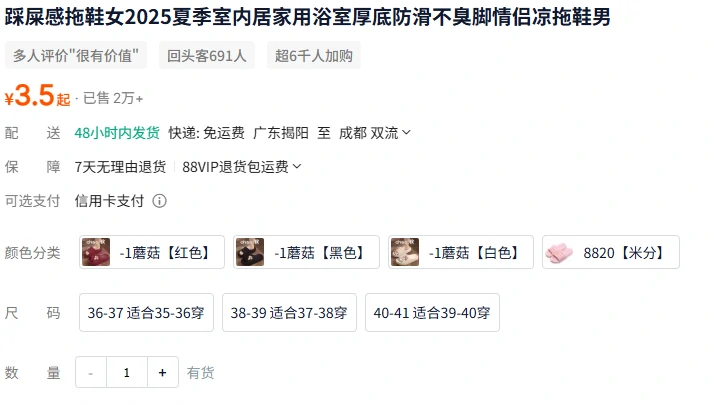
Both are visible on the listing before you paste anything. The rest of what a listing promises is visible there too, and it is worth knowing which promises follow your order out of China and which ones stop at the warehouse door.

Read the rows under the price. A dispatch promise counted in hours is a promise about getting the goods to a Chinese address, and free delivery is free delivery inside China. A no-questions return window is a return to the seller, inside China, in a few days. None of the three survives the international leg, and none of them is the agent promising you anything.
That is not a trick. It is simply what those chips have always meant on a domestic platform. Read them as evidence that the shop is active and takes its own rules seriously, which is genuinely useful, and not as terms you can invoke from another country.
Seller conditions quoted from the official disclaimers page, read on 2026-09-22. Read the original.
LOCKS
Where sizing goes wrong
The size chart belongs to the seller as well
Under the price sits the part that actually gets bought: colour, size, quantity. These are the seller own option set, written in their own words, and the agent buys the combination you tick.
Look at how a size is usually written. It is not a number, it is a mapping: this size, it says, suits that foot. Two shops selling the same item can map it differently, and neither of them is wrong, because there is no standard being applied. The agent does not convert it and has never claimed to.
Which is why the message box on the order form matters more than it looks. A measurement in centimetres passed to the seller beats any conversion chart, and OrientDig states that a size check at the warehouse follows whatever you wrote there. The full order form is on before you pay.
FACT
Reading an agent by what it commits to in writing
Trusting an agent is not a feeling, and it is not a comparison of feature lists. Every service in this market offers purchasing, storage, photos and consolidation, so the list tells you nothing. What separates them is what they are willing to write down as a commitment with a number attached to it. Four things are worth looking for, in any agent, not only this one.
A response window, not a promise to care
OrientDig publishes one for every order state: six hours inside business hours, next working day outside them, forty-eight hours for a question once the seller has been paid. Numbers like that can be missed, which is the point of having them.
A stated chase schedule for a silent seller
The published standard says a domestic seller is expected to dispatch in three to seven days, that the first chase happens on day four, and that it repeats every three or four days. An agent that has thought about the failure case has usually met it.
A default for when you go quiet
If the seller turns out to be out of stock you get asked what to do, and the order cancels itself if you do not answer within seventy-two hours. A default that returns your money is a better sign than one that holds it.
An honest exclusion list
The most useful thing on the official pages is the list of things the service says it cannot do. A service that publishes what it will not verify is easier to plan around than one that implies it checks everything.
Commitments quoted from the official service standards, read on 2026-09-22. Open the help centre.
LOCKED
Where the inspection stops
Electronics, branded goods, tickets and cards are named as things that cannot be professionally inspected.
The stated reason for electronics is refreshingly blunt: they cannot turn the equipment on to check the quality. So what happens at the warehouse is a look and a set of photographs, not a test. Nobody powers it up, nobody runs it, nobody authenticates anything.
Read across the whole page and the pattern is consistent. The seller owns the description. The agent owns the handling. Nobody in the chain is being paid to contradict the seller, and no part of the process was ever designed to. For the part of the market this site is named after, that is the single most useful sentence available, and it is on their own page rather than ours.
What you can do about it is set the expectation before you pay and book the photographs that would tell you something. The terms page covers what the photo set is and what it can actually show.
Quoted from the official disclaimers page, read on 2026-09-22. Read the original.